Bookmaker vs Betting Exchange: Understand How It’s Different

Curious about the difference between a bookmaker and a betting exchange? This guide breaks down how each works, their key differences, and which might suit your betting style best.
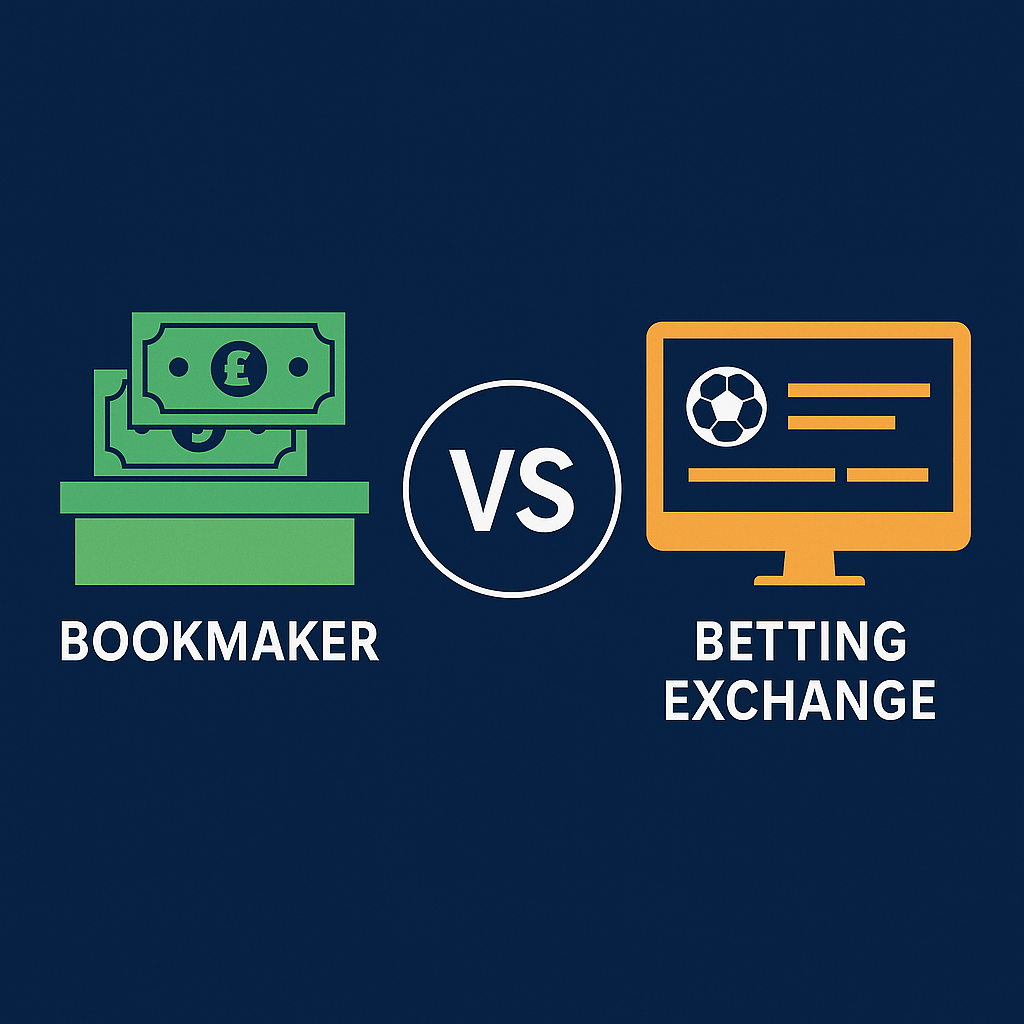
Introduction: What Does “Bookmaker vs Betting Exchange” Really Mean?
If you’ve ever placed a bet in the UK, chances are you’ve dealt with a bookmaker – the familiar High Street brands or online betting sites like William Hill, Ladbrokes, or Bet365. But in recent years, a different way of betting has surged in popularity: the betting exchange.
Understanding the difference between bookmaker vs betting exchange isn’t just trivia. It can completely change how you place bets, manage risk, and even how much profit you might make.
In this in-depth guide, we’ll break down:
- What a bookmaker is and how they work
- How a betting exchange operates
- Key differences between bookmakers and betting exchanges
- Practical examples from UK sports
- Pros and cons of each
- FAQs to clear up common confusion
Let’s get stuck in.
What Is a Bookmaker?
A bookmaker (or “bookie”) is a company or person who takes bets from punters (bettors) on sports or other events. They set the odds, accept your stake, and pay out if your bet wins.
How Bookmakers Make Money
Bookmakers make money by building a profit margin into their odds. This is called the overround.
Let’s take a simple football match example:
- Man United to win: 1/1 (2.00 decimal)
- Draw: 2/1 (3.00 decimal)
- Man City to win: 2/1 (3.00 decimal)
If these odds perfectly reflected true probability, they’d add up to 100%. But bookmakers tweak the odds so the combined implied probability might total 105% or more. That 5% extra is their margin, guaranteeing a profit over the long run.
Why It Matters: Even when punters win, the bookmaker has usually factored in enough margin to stay profitable.
Fixed Odds Betting
Bookmakers traditionally offer fixed odds. This means the price you take when you place your bet stays the same, regardless of how the odds move later.
Example:
- You back Liverpool at 3.00 to win the Premier League in August.
- By March, they’re favourites at 1.50.
- You still get paid at 3.00 if they win.
Bookmakers in the UK Market
UK bookmakers operate under licences from the UK Gambling Commission (UKGC), ensuring they:
- Protect punters’ funds
- Offer fair odds
- Promote responsible gambling
Familiar names include:
- William Hill
- Coral
- Ladbrokes
- Betfred
- Bet365
- Paddy Power
These brands dominate both physical shops and online betting.
What Is a Betting Exchange?
A betting exchange is a platform where punters bet directly against each other, rather than against a bookmaker. The exchange simply acts as a middleman.
Instead of offering odds, the exchange matches customers who want to back a bet with customers who want to lay it.
Back vs Lay Bets Explained
This is where betting exchanges get unique.
- Back Bet – You bet on something to happen.
- “I back Arsenal to win at odds of 2.50.”
- Lay Bet – You bet on something NOT to happen.
- “I lay Arsenal to win at odds of 2.50.” (Meaning you’re betting they’ll lose or draw.)
So, on an exchange, you can act like the bookmaker by laying bets.
How Betting Exchanges Make Money
Exchanges don’t build a margin into the odds like bookmakers. Instead, they charge a commission (often around 2-5%) on your net winnings from a market.
Example:
- You win £100 on a back bet.
- Commission is 5%.
- Exchange deducts £5. You keep £95 profit.
Key Betting Exchanges in the UK
Popular UK exchanges include:
- Betfair Exchange – the biggest in the world
- Betdaq
- Smarkets
- Matchbook
Betfair Exchange alone handles billions in matched bets each year.
Bookmaker vs Betting Exchange: Key Differences Explained
Let’s dig into the crucial differences between bookmaker vs betting exchange.
1. Who You Bet Against
- Bookmaker: You bet against the bookie. The bookie takes the other side of your bet.
- Exchange: You bet against other punters. The exchange just matches your bet.
Example: On Betfair Exchange, if you back England to win the Ashes, another user must lay that same outcome for your bet to go through.
2. Odds
- Bookmaker: Odds include the bookmaker’s profit margin.
- Exchange: Odds can be better value because there’s no built-in margin, just commission.
Example:
- Bookie odds on Serena Williams to win Wimbledon: 4.00
- Exchange odds on Serena Williams: 4.30
Those extra points can mean a big difference for serious punters.
3. Laying Bets
- Bookmaker: You can only back outcomes.
- Exchange: You can lay outcomes, acting like the bookie.
This opens up new strategies like:
- Trading (locking in profit before an event ends)
- Arbitrage betting
- Matched betting (using free bets for guaranteed profit)
4. Liquidity
- Bookmaker: Always accepts your bet (within limits).
- Exchange: Needs another user to match your stake.
If there’s no liquidity in a market, your bet might not get matched.
Example:
- Big football matches on Betfair have huge liquidity (e.g. £5 million matched).
- Lower leagues might only have £1,000, making it harder to place larger bets.
5. Bet Limits
- Bookmaker: May limit your stakes or even restrict your account if you’re consistently winning.
- Exchange: Less likely to limit you since other punters take the risk, not the exchange itself.
6. In-Play Betting
- Bookmaker: Offers in-play betting but might suspend markets quickly during key moments.
- Exchange: Also offers in-play but with frequent suspensions and changing liquidity.
- We’ve created an In-Play Betting Guide for Beginners. Don’t hesitate to check it out if you want to learn more about this betting feature.
7. Fees & Margins
- Bookmaker: Profit built into odds (overround).
- Exchange: No overround, but commission on net winnings.
For smaller stakes, the commission difference might not matter much. For higher stakes, exchanges often mean better value.
Bookmaker vs Betting Exchange in UK Betting Scenarios
Let’s see how this plays out in real UK events.
Example 1: Grand National Betting
- Bookmaker:
- Odds on favourite: 8/1 (9.00 decimal)
- £10 stake = £80 profit if it wins.
- Exchange:
- Odds on favourite: 9.8
- £10 stake = £88 profit before commission.
- After 5% commission, profit = £83.60
Result: You’d make £3.60 more with the exchange.
Example 2: Laying a Football Team
Suppose you think Man City are overrated at home.
- Bookmaker: Only lets you back teams, so you’d have to back Man City’s opponent or a draw.
- Exchange: You can lay Man City at 1.50 odds.
If Man City fail to win, your lay bet wins.
Example 3: Matched Betting
Matched betting exploits bookmaker free bets.
- You back Chelsea to win with a bookie using a free bet.
- Simultaneously, you lay Chelsea on an exchange.
No matter what happens, you lock in a small profit because the back and lay bets cancel each other out.
This is only possible because exchanges let you lay outcomes.
Pros and Cons of Bookmakers
 Pros
Pros
- Simplicity
- Guaranteed liquidity
- Fixed odds
- Free bets and promotions
 Cons
Cons
- Odds include margin
- Bet limits for winning punters
- No lay betting
Pros and Cons of Betting Exchanges
Pros
- Often better odds
- Ability to lay bets
- Less likely to restrict accounts
- Great for trading and matched betting
Cons
- Needs liquidity
- Small markets may have poor odds
- Commissions eat into profits
- More complex for beginners
OUR Practical Tips for UK Punters
- For casual betting, a bookmaker might be simpler.
- For value hunting or trading, an exchange can be a game changer.
- Compare odds between bookies and exchanges before placing large stakes.
- Always factor in commission when using exchanges.
- If you’re matched betting, exchanges are essential.
Final Thoughts
So, bookmaker vs betting exchange boils down to this:
- Bookmakers offer simplicity, fixed odds, and promotions.
- Betting exchanges offer flexibility, often better odds, and the power to lay bets.
Neither is “better” in every situation – it depends on how you like to bet. For casual flutterers, bookmakers remain the go-to. For punters who want to squeeze every penny of value or try advanced strategies, betting exchanges open a whole new world.
Where to go next on our site
- Our Betting Glossary and betting terms explained for the UK
- Best betting sites in the UK – tested and verified reviews of the best bookmakers in the UK,
- Best free bets offers – clear analysis of self-tested welcome offers for new customers,
- Football betting guides – bookmakers reviews on football and soccer betting.
Safer‑gambling resources
- GAMSTOP self‑exclusion – register free to block online gambling accounts. (Gambling Commission)
- National Gambling Helpline (GamCare) – 0808 8020 133, 24/7. (GamCare)
- NHS: Help for problems with gambling – official support and clinic info. (nhs.uk)
- GambleAware – advice, tools and signposting to treatment. (GambleAware)
Compliance note on scope: This guide focuses on Great Britain under the Gambling Act 2005, regulated by the UK Gambling Commission. If you’re in Northern Ireland, check local arrangements before you bet.
This guide was created with AI assistance and reviewed by a human editor to ensure accuracy and clarity. It is intended for informational purposes only and does not encourage gambling.
Common FAQs
Is a betting exchange legal in the UK?
Yes. Exchanges like Betfair are fully licensed by the UK Gambling Commission.
Can I get free bets on exchanges?
Generally no. Exchanges rarely offer traditional free bets. However, some exchanges offer commission discounts for new customers.
Do exchanges have betting shops?
No. Exchanges operate exclusively online.
Why do bookmakers limit winning punters?
Bookmakers manage risk. If you win too often, they might restrict stakes to protect their profit margin.
Are odds always better on exchanges?
Not always. For small events or low-liquidity markets, bookmaker odds might be just as good or better once you account for commission.