Crypto vs Fiat iGaming Canada: Payments, Regulation & Trust

To better understand where things are heading, it’s worth breaking down how fiat-first and crypto-first models actually operate in Canada.
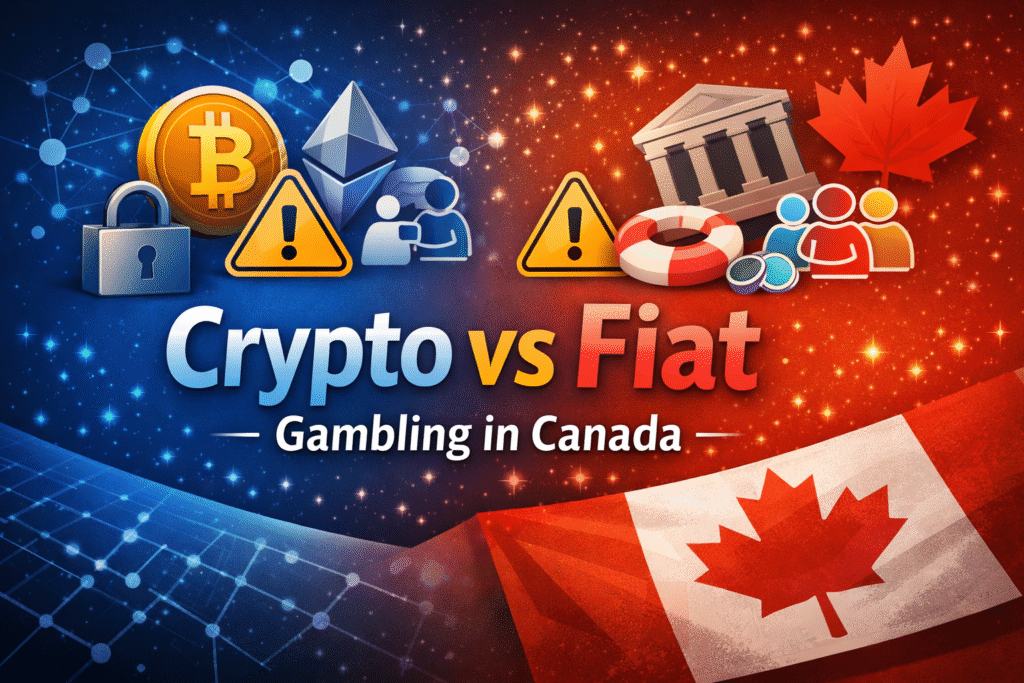
Canada’s online gambling landscape is currently navigating a pivotal shift. On one side, there’s a well-established, highly regulated ecosystem built on traditional banking systems. On the other, a fast-growing wave of crypto-first platforms offering speed, anonymity, and global accessibility.
While it may seem like a simple discussion about payment methods, the reality runs much deeper. This divide influences compliance frameworks, consumer protections, and ultimately, how much players trust the platforms they use.
Canada’s Regulatory Backdrop: Why Structure Matters
Online gambling in Canada is governed by the federal Criminal Code. This framework allows provinces to oversee and operate betting activities, while limiting unauthorized providers. Because of this decentralized approach, each province has its own regulatory nuances — with Ontario emerging as the most influential example (see the federal framework here: ).
Ontario’s regulated iGaming market, launched in 2022, marked a major milestone. Supervised by the Alcohol and Gaming Commission of Ontario (AGCO) and run operationally by iGaming Ontario, it introduced a structured and competitive digital betting environment.
Since its launch, the province has handled tens of billions of dollars in annual wagers, with more than 40 licensed operators complying with strict regulatory requirements. As a result, Ontario has effectively set the standard for online gambling across Canada.
What Is a Fiat-First iGaming Model?
A fiat-first model centers on traditional currencies — primarily Canadian dollars — and relies on established banking systems for transactions.
Common Payment Methods
- Interac e-Transfer
- Debit and credit cards
- Bank wire transfers
- Regulated e-wallet services
These payment systems are deeply embedded within Canada’s financial infrastructure, meaning identity checks, anti-money laundering (AML) controls, and transaction monitoring are standard parts of the process.
Why Compliance Is More Seamless
Fiat-based systems naturally align with existing financial regulations. Institutions like FINTRAC already oversee banks and money service businesses, which helps streamline compliance for gambling operators.
This alignment isn’t just administrative — it directly impacts licensing, transparency, and the ability to resolve disputes effectively.
Player Trust and Reliability
Canadian players are generally familiar with traditional financial protections. If an issue arises, there are established dispute mechanisms. Transactions may be reversible in some cases, and provincial regulators can step in when needed.
Operators like Pinnacle, known for efficiency and pricing models grounded in traditional systems, reflect this approach. Their focus is less on innovation and more on reliability and regulatory clarity.
For many users, that consistency matters more than cutting-edge features.
What Defines a Crypto-First Model?
Crypto-first platforms prioritize digital assets — such as Bitcoin, Ethereum, or stablecoins — as their main payment option rather than offering them as a secondary feature.
Why Players Are Drawn to Crypto
These platforms often highlight:
- Faster transaction processing worldwide
- Reduced dependence on banks
- Direct wallet-to-wallet payments
- Transparency claims via blockchain technology
Brands like Roobet are often cited in conversations around crypto-native gaming, where digital currency is central to the platform’s identity. Likewise, operators such as Rainbet showcase how crypto can simplify cross-border transactions.
The Canadian Context
In regulated provinces like Ontario, cryptocurrencies are not currently accepted as standard payment methods within licensed platforms. Regulators have raised concerns about AML compliance, especially with international transactions.
As a result, many crypto-first platforms accessible to Canadians operate outside provincial regulatory systems — a key distinction that affects player protection.
Comparing Fiat-First and Crypto-First Models
Table 1 — Core Structural Differences
| Category | Fiat-First Model | Crypto-First Model |
| Primary Currency | CAD (or fiat currencies) | Bitcoin, Ethereum, stablecoins |
| Payment Infrastructure | Banks, Interac, cards | Blockchain wallets |
| Regulatory Alignment | Strong (especially in Ontario) | Often offshore |
| Transaction Reversibility | Sometimes possible | Generally irreversible |
| Consumer Protection | Provincial complaint systems | Limited formal recourse |
| Volatility Risk | None | Present (unless using stablecoins) |
At its core, the difference goes beyond transaction speed — it’s about the regulatory ecosystem supporting each model.
Do Canadians Actually Prefer Crypto?
While cryptocurrency adoption has increased in Canada, most users still view it as an investment rather than a day-to-day payment method. According to research from the Bank of Canada, real-world usage for transactions remains relatively low.
At the same time, data from Ontario regulators shows that most players prefer licensed platforms over unregulated ones. This suggests that trust, legality, and security continue to outweigh novelty.
Globally, online gambling is expanding rapidly, driven by both innovation and regulatory change. However, innovation alone doesn’t replace the need for strong consumer protections.
Market Scale and Why It Matters
Table 2 — Ontario iGaming Snapshot
| Metric | Approximate Market Reality |
| Active Licensed Operators | 40+ |
| Annual Wagers | Tens of billions CAD |
| Oversight Body | AGCO |
| Market Manager | iGaming Ontario |
| Primary Payment Standard | Fiat-based systems |
Ontario’s growth highlights how a regulated, fiat-first model can scale effectively while maintaining oversight and accountability.
Because this system is already functioning at a large scale, there’s less immediate pressure to shift toward crypto-based payment infrastructure.
International Case Studies: Payment Evolution in Regulated Markets
Looking globally, most mature gambling markets adopt new payment technologies cautiously — typically after strengthening regulatory frameworks.
In Ontario, early market analysis emphasized compliance and consumer protection before exploring alternative payment options. Reports on its multi-billion-dollar growth confirm that traditional banking systems remain central.
European markets followed a similar path. Industry insights on sports betting reform show that improvements in licensing, responsible gambling, and advertising rules came first — with payment innovation introduced later.
The United States offers another parallel. Since PASPA was repealed in 2018, states have built tightly regulated betting markets. Like Ontario, they prioritize transparency, identity verification, and geolocation controls. While offshore platforms promote crypto, licensed operators still depend on conventional banking and approved digital wallets. In states like New Jersey, regulatory discipline has been key to growth.
Emerging markets such as Brazil are currently focused on legalization, taxation, and licensing clarity rather than crypto adoption. Similarly, Italy’s strict regulatory framework ties payment systems closely to national banking infrastructure.
Across these examples, a clear trend emerges: strong regulatory foundations come first — payment innovation follows.
Social Media Insight
For updates on regulation and market developments, iGaming Ontario regularly shares insights via its official X account:
These updates provide a useful perspective on how regulators view payment systems within Ontario’s structured environment.
Where Players Fit Into This
For players, the choice between fiat and crypto platforms is often practical rather than ideological.
Speed and privacy are appealing — but so are:
- Reliable payouts
- Dispute resolution options
- Regulatory oversight
Those interested in regulated options can explore the current list of best betting sites in Canada to see how licensed operators handle payments and compliance.
Meanwhile, Ontario iGaming market developments continue to show how the local ecosystem is evolving.
Conclusion: Innovation Within Guardrails
Crypto-first iGaming platforms bring clear technological advantages. Faster transactions and borderless access are attractive, particularly for certain user segments.
However, in Canada — and especially in Ontario — the industry is firmly grounded in a fiat-first model built on compliance, transparency, and player protection.
Rather than a complete shift toward crypto, the future will likely involve gradual integration. This could include faster fiat payment systems, enhanced digital identity solutions, or even regulated experiments with blockchain-based tools — all within existing oversight frameworks.
For now, trust remains the deciding factor. And in Canada, that trust is still rooted more in regulation than in innovation.