


Since 1996, I’ve been a bit of a glutton for punishment. Back then, I started tracking “The Reserves” — as they were quaintly known — before expanding my watch to the FA Youth Cup and the various iterations of the Everton Academy seniors.
Naively, I thought the fanbase would be clamouring for news on the next generation of stars. I was wrong. Aside from a dedicated band of brothers who’ve stuck with me, there has always been a noticeable apathy toward the goings-on at Finch Farm. But if you look at the cold, hard numbers, that lack of interest isn’t just understandable — it’s statistically justified.
The Long and Winding Road to Nowhere
For the young players inside Category 1 Academies, the statistics are a brutal wake-up call. We currently have 29 clubs operating at this elite level, each carrying roughly 20 players in their U21 sides. That’s around 600 “elite” youngsters currently dreaming of the big time.
The reality? It’s a funnel with a blocked exit:
-
The 1% Club: Of those who sign a scholarship at 16, fewer than 1% will ever make a living in the Premier League.
-
The Glass Ceiling: The jump from PL2 to the first team is the ultimate “glass ceiling” — shatterproof for almost everyone.
-
The Survival Rate: Only 3% to 5% manage to sustain a professional career across the top four divisions. Most are “released” into the wild, dropping down the pyramid to find minutes.
-
The Age 21 Cliff: By the time they reach 21, 97% of those scholarship kids are no longer playing top-flight football.
So, why invest emotionally in a kid who, statistically, has a better chance of winning the lottery than starting at Bramley-Moore Dock?
“Remember the Name…”
Every once in a generation, however, the funnel produces a freak of nature. We had one: Wayne Rooney.
But even Rooney’s supreme talent felt the weight of the “Everton way.” It was only when he escaped the rigid tutelage of David Moyes to join Sir Alex Ferguson that he truly exploded, scoring a Champions League hat-trick on his debut and embarking on a journey to become United’s record goalscorer.
His exit remains a shadow on the legacy of Bill Kenwright. The man who once boasted he wouldn’t sell Rooney for £50M eventually accepted a bargain-bin fee of £27M. That’s ancient history now, but it set a precedent: even when we find a “generational” talent, we either sell them or stifle them.
The Curious Case of Tyler Dibling
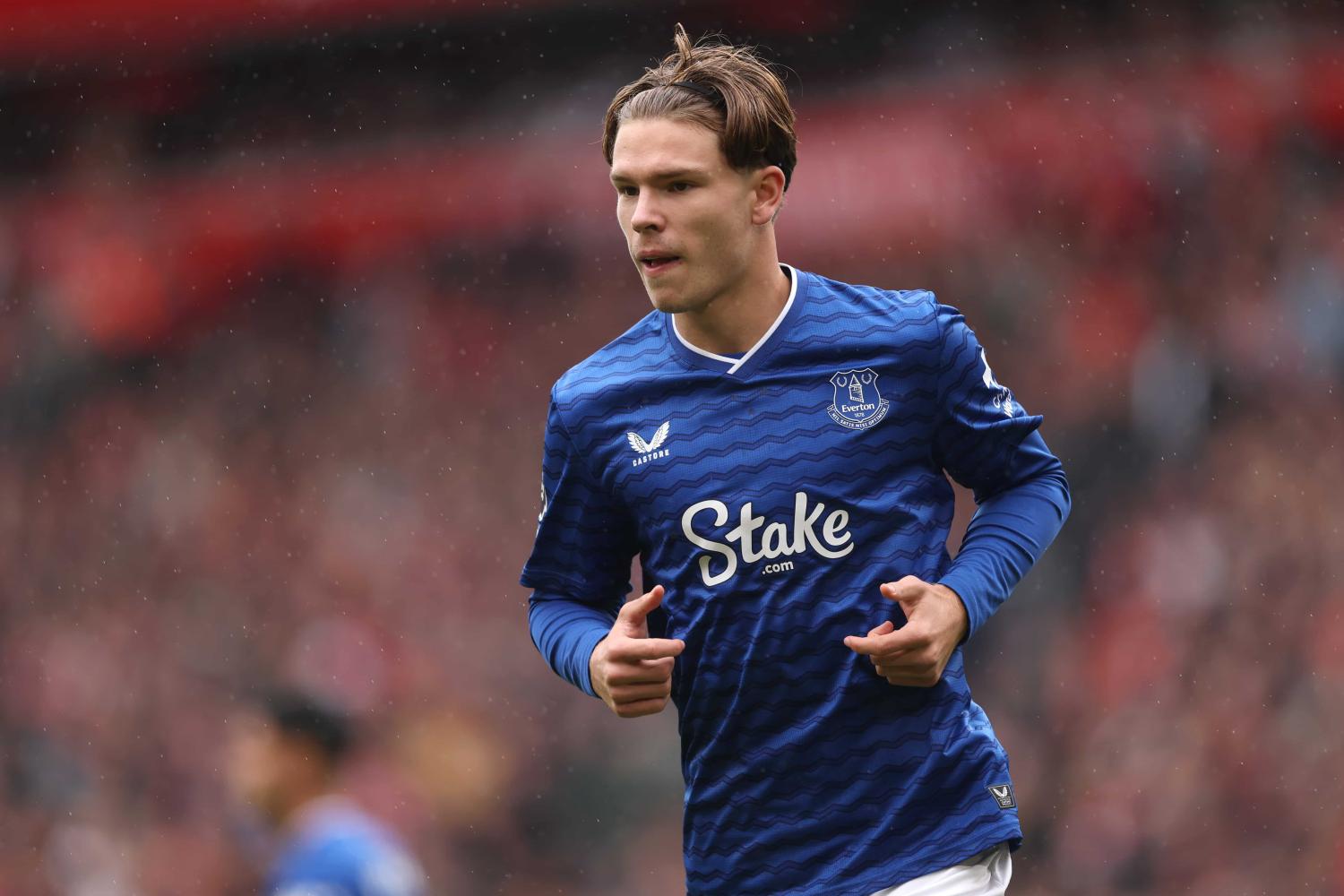
Fast forward to today, and we see the same pattern repeating with Tyler Dibling.
Everton paid an eye-watering £40M — nearly a club record — to pry him away from Southampton. His former manager, Russell Martin, called him the “most talented player I’ve ever worked with.” He was supposed to be the jewel in the crown of the new era under David Moyes at the Hill Dickinson Stadium.
Instead, the 20-year-old’s development has hit a brick wall. Dibling has spent the season as a spectator, starting only four Premier League games and logging a measly 513 minutes. First, it was the arrival of Jack Grealish on loan; then it was the “need” to play Ndiaye. There is always an excuse for why the “flair” player must sit.
“He’ll have to do better in his work and training,” Moyes says, echoing the same “defensive-first” rhetoric we heard twenty years ago. “We brought in Tyrique George for competition… we want Tyler to step up.”
Even club legend Leon Osman has waded in to defend this stagnation, citing the “weight of the price tag” and the need for Dibling to learn the defensive side of the game. Osman argues that in a Moyes side, what you do off the ball is more important than what you do on it.
Education or Stagnation?
Last week, Moyes doubled down on his “frugal” management of youth, claiming that “sitting back for the best part of the season” will do the likes of Dibling and Merlin Rohl no harm:
“Merlin, we like, Tyler, we like. Tyler, we’re giving more time to because of his age.
“Merlin could have easily been involved in some more games and played a little bit more time.
“It’ll do him no harm to have sat back for the best part of the season and looked at it. No, we like them, they’re both good boys.”
I couldn’t disagree more. At 20 years old, a player needs grass under his boots, not a view from the dugout. We are witnessing enforced stagnation at a critical juncture. If Dibling fails to become the superstar his talent suggests, the club will point to those 99% failure statistics and say the odds were always against him.
But sometimes, it’s not the player who isn’t ready for the stage — it’s the manager who’s too afraid to give them the freedom to perform and allow their on-field skills to flourish in front of a passionate Hill Dickinson Stadium crowd. I am convinced that is what would bring the best out of these young players.