


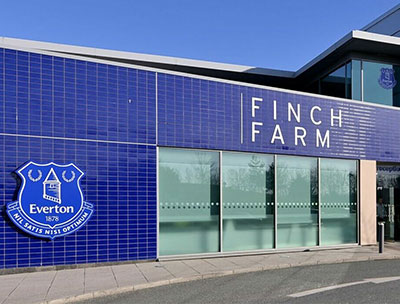
Everton's Academy has been through some rough times in recent years, with few trophies to celebrate, and even fewer players making it through the development levels to become fully fledged Premier League stars.
The days of local talent seamlessly making it through to the first team seem a distant memory. While the case of Anthony Gordon — our last big academy product — signing for Barcelona after a highly successful spell with Newcastle United could be cited as a success story, it comes with the rather embarrassing caveat that he only joined the Everton Academy in 2012 as an 11-year-old after having been released by Liverpool. We didn't discover him; we just picked up our neighbours' discarded dross.
Much of the criticism directed at Finch Farm over the last decade has focused on a persistent "jobs for the boys" culture. Under the former regime, ex-players frequently seemed to be handed plum development roles, leaving fans to question their actual qualifications for such roles that should be critical to the modern infrastructure of top-flight professional football.
David Unsworth was the prime example. He presided over a period of heavily mixed fortunes for the Young Blues, winning the Premier League 2 (then the Under-23 trophy) twice — first in 2017 and again in 2019. Yet, while those trophies looked nice in the cabinet, the actual output was damning. Unsworth's teams were often built around physically mature 22-year-olds who dominated youth football but completely lacked the skills and spirit needed along the pathway to the top tier, eventually slipping down into the EFL wilderness.
When Unsworth departed, Paul Tait stepped up, putting in 8 years of dedicated service across the U18s and U21s. But this week, the club finally drew a line under that entire era.
The New Dawn: Clearing the Decks
Following a comprehensive, 6-month strategic review led by Technical Director Nick Cox, the club announced a sweeping restructure that completely abolishes the traditional U21 Head Coach role. Paul Tait has left the club, bringing an end to his 16-year association with the Blues.
Instead of comfortable continuity, Everton appear to be finally implementing a highly modern, streamlined leadership structure under new Academy Director Dean Rastrick, who arrived this summer with an elite youth-development pedigree from Tottenham Hotspur and Norwich City.
The new structure signals a massive shift toward accountability and specialised progression of young developing talent:
-
David Hughes (Head of Academy Player Development): Joining after a stint at Newport County and prior elite academy experience at Manchester United, Hughes takes on a massive, unified remit. He will directly oversee the U21 group, bridging the gap between youth football and first-team demands.
-
Carl Darlington (Head of Academy Coach Development): After a steadying hand as interim director, Darlington returns to a permanent role focused purely on elevating the quality of coaching across all age groups.
-
Nick Chadwick (PDP Senior Coach & Loans Programme Manager): In a vital move for modern football finance, former Everton Aademy graduate Chadwick will explicitly manage the development and outward loaning of players.
-
Ben Dickson: Earns a well-deserved internal promotion to Head of Academy Recruitment.
Why This Matters in the Friedkin Era
This complete overhaul isn't just about shifting names on office doors; it represents a fundamental change in philosophy driven by The Friedkin Group's broader mandate to make Finch Farm a productive pipeline.
Under SCR constraints, homegrown talent is quite literally worth its weight in gold. Pure profit on the balance sheet is what keeps modern clubs alive. Yet, our current reality was starkly highlighted by this summer’s standard academy cull, where 12 players — including Roman Dixon and Francis Okoronkwo — were released upon their contracts expiring, sparked by long-standing injuries and a lack of belief that they could break into David Moyes's rigid first-team squad structure.
We can no longer afford to run a finishing school for players destined for League One. The academy must exist to build modern, dynamic athletes capable of stepping out at the new Hill Dickinson Stadium and performing in the top flight, or generating vital trading capital.
Nick Cox and Dean Rastrick are finally bringing an elite, audited, and unsentimental structure to a department that felt stagnant for far too long. The "old boys' club" is officially dismantled. Now, the real work begins.
Reader Comments (67)
Note: the following content is not moderated or vetted by the site owners at the time of submission. Comments are the responsibility of the poster. Disclaimer ()
2 Posted 09/07/2026 at 16:34:18
Grow a team of kids together, at all levels. All levels play the same formation. The kids grow together, fight together.
3 Posted 09/07/2026 at 16:50:12
4 Posted 09/07/2026 at 17:00:36
You have first-hand experience in this so I'm always interested in your thoughts. What don't you like about it, mate?
5 Posted 09/07/2026 at 17:10:16
SCR is based on revenue, not profit?
6 Posted 09/07/2026 at 17:12:55
So where's the 200-point action plan?
7 Posted 09/07/2026 at 17:54:02
It will be exciting to build a strong pipeline of young players for Moyes to ignore.
8 Posted 09/07/2026 at 18:13:57
He prefers the older more experienced player.
9 Posted 09/07/2026 at 18:25:43
It may take some time to deliver an improved talent stream but at least there is a plan to do so.
10 Posted 09/07/2026 at 19:24:01
Other than the head honcho, all but one of the guys mentioned appear to be existing Everton employees.
11 Posted 09/07/2026 at 19:31:59
12 Posted 09/07/2026 at 20:54:31
This changeover also explains why some young Academy players considered promising have moved on. Cox and his new team clearly want to choose and develop their own.
Brendan #10, not quite correct. Cox joined us last year. He immediately hired Hughes and Chadwick. He just hired Rastrick to be his Number 2. The only holdovers from before Cox landed are Darlington and Dickson. Tait's departure after so many years appears to be clear evidence of the new era.
This is exactly what I hoped for and expected from Cox. And I hope and expect that Director of Scouting James Smith (recruited from Man City) is doing exactly the same thing with our recruitment setup. He has apparently kept on Head of Scouting, Lee Sargeson.
13 Posted 09/07/2026 at 20:58:53
Everything else makes loads of sense, especially coaching the younger teams to play like the first team. I think this was the reason that Forest had a lot of success bringing a lot of young players through into the first team when I was there all those years ago.
I remember in the season that we came 4th under David Moyes, Everton's full team getting a total football lesson off a team of kids from Arsenal in the League Cup. The Arsene Wenger way was completely ingrained into those young kids and, even though we lost, for a footballing purist like myself, it was a night when I just sat back and thoroughly enjoyed getting entertained by some marvellous young players.
I don't think any of those kids went on to really make the grade. The only reason I could think of was that they must have struggled once they moved away from playing the total football that Arsenal played during that period.
I see there has just been a massive revamp at our academy, and not before time, I'd say. But until we go and get ourselves some innovation, I won't be getting excited about things changing that much.
If we could achieve what you wrote @2 though, John, I think it would be absolutely brilliant to see. Just to see Everton win a cup again would be fantastic, but if we started developing our own players and winning, then that would be beautiful to see.🤞
14 Posted 09/07/2026 at 21:19:19
That puts a different, much more positive, slant on it entirely.
15 Posted 09/07/2026 at 21:31:27
The ethos of all teams playing the same was Brands's ideology in the early days of Moshiri when Brands was Director of Football.
The problem was alleged Unsworth went crying to tiny tears BPBB because he wanted to win Premier League 2. To be fair, they did... but playing the Unsworth way. Total irony is none of that team made it long term in the first team.
16 Posted 09/07/2026 at 22:02:51
As Dave says at 1, out with the old in with the new.
No overnight sensation here though, as this will not prove its worth for a few years yet.
Overdue but welcome and very much in line with the new owners strategy.
17 Posted 09/07/2026 at 22:17:11
What is the metric here? It's obviously not winning trophies for the Academy sides as that did Unsworth absolutely no good at all.
Mike says it's young players making senior appearances. But surely making just one appearance -- which a lot of our lads have done in the past before they disappeared to oblivion -- means next to nothing.
It has to be players coming through to be an intrinsic part of the senior squad. But how long do you give it? Coz that ain't happening in one or two or three seasons.
Or the model other clubs seem to profit from: selling them on for a substantial fee.
18 Posted 09/07/2026 at 22:17:48
Moshiri brought the DOF model to Everton and with that a handsomely rewarded Marcel Brands,
The suggestion that Unsworth's agenda was allowed to trump Brands just isn't credible.
19 Posted 09/07/2026 at 22:45:59
20 Posted 09/07/2026 at 22:59:50
If it happened as you allege I'm pretty sure that the Brands interview would have featured heavily on ToffeeWeb.
Must have missed that one... nor do I recall anyone referencing it till now.
Any chance of a link?
21 Posted 09/07/2026 at 23:20:05
Good post mate,and a good point on experience.
You will know what it's like when a team grow together and garner the "you fight one you have to fight eleven."spirit.
Your right though.The Utd team of kids were exceptional and a one off really.
22 Posted 09/07/2026 at 23:52:16
https://www.nytimes.com/athletic/5428831/2024/04/22/manchester-united-academy-players/
It's behind a paywall but if you wanted to read and excerpt it, I'm sure you'll be able to.
Of course you remain to be convinced. We all do. The Academy is yet another aspect of an overall TFG plan that likely will take years to carry through and execute. And you're right, it won't be a matter of a season or three. This is a long, slow process necessitated by a decade or more of neglect.
What I'm convinced of is that TFG have hired the right man to rebuild the Academy into a foundational piece of the club's eventual success.
23 Posted 10/07/2026 at 03:08:14
I just hope I live long enough to see any rewards. 41 players is impressive, but how many of them were actually any good?
Fingers crossed this move produces positive results
24 Posted 10/07/2026 at 03:39:04
Nick Cox says that it's 35 by the way.
Interesting exit chat here:
https://www.manutd.com/en/news/inside-the-academy-nick-cox-column-reflecting-on-manchester-united-departure-september-2025
This high level of Man-U Academy debutants is actually an embedded piece of the club's history:
249 debutants since Christmas 1931 'represents roughly half of the players who have ever played for our great club and it’s an incredible statistic'
https://www.manutd.com/en/news/inside-the-academy-nick-cox-reflects-on-omari-forson-senior-debut
Paul Tait. Not our Paul Tait I believe. But what has happened to our Paul Tait?
25 Posted 10/07/2026 at 05:01:02
What is the Academy set up in 'merica: do clubs have academies, is there a national academy?
I ask because if they exist it doesn't seem to me that they are doing a good job when you look at the starting XI v Belgium for a country of what 350Mish.
26 Posted 10/07/2026 at 05:24:27
Over to you MG, is this guy correct? I'm assuming he is talking only about those who have not signed professional forms.
27 Posted 10/07/2026 at 05:29:38
28 Posted 10/07/2026 at 06:24:10
I don't know. I've never seen (or looked for) an actual list. Some of those 41 (or 35) players were sold on to other clubs, in the PL and other leagues. One of 'em is anchoring our midfield, brilliantly. Another has led Napoli to first- and second-place finishes in Serie A the past two seasons. Others that come to mind off the top of my head are Rashford, Welbeck, Elanga and Henderson.
Our Paul Tait has been recently dismissed in this transition. I believe he's the guy that Rastrick replaced.
29 Posted 10/07/2026 at 06:38:24
Wow, so the Paul Tait on here was Finch Farm's Paul Tait? I had no idea.
I'd love to hear your views on academies over here.
30 Posted 10/07/2026 at 06:41:04
For competitive reasons, the private academies emphasize winning silverware over each other, not developing players with professional abilities. The parents send their kids to the academies that win national titles. That's the single biggest reason the USA sucks at developing top players who really know how to play the game.
This USA lineup was actually the most talented we've ever put out there, but many of those players were developed in Europe, either born there (Dest, Robinson, Tillman) or left the US as youngsters to join overseas academies (Pulisic, Balogun, Weah).
There is no national youth academy, and a national training center has only recently been established. Nor are there national programs for identifying poor kids in South Texas or Arizona who have the skills.
31 Posted 10/07/2026 at 06:44:14
32 Posted 10/07/2026 at 07:04:35
This has to be addressed Mike.
There is no national youth academy, and a national training center has only recently been established. Nor are there national programs for identifying poor kids in South Texas or Arizona who have the skills.
God knows how many potential stars have been deported or lurk unseen. In Blighty those working class council estates are targeted.
33 Posted 10/07/2026 at 07:15:25
Axel Tuanzebe (played in WC for Congo)
Scott McTominay
Angel Gomes
Tahith Chong (also played at WC)
James Garner
Mason Greenwood
Dean Henderson
Anthony Elanga
Hannibal
Tom Heaton
And of course, Kobbie Mainoo.
Over a similar period, our standout graduates would be;
Anthony Gordon
Er..
Harrison Armstrong (fingers crossed)
34 Posted 10/07/2026 at 07:30:32
US soccer is, and always will be, a distant fifth on the money totem pole, both for TV revenues and for salaries. The median MLS salary is exactly $352,104. The National Hockey League, 4th behind the others I mentioned, pays a median of $2.5 million.
There's no money in footy in the US.
35 Posted 10/07/2026 at 07:36:49
ERM, Tom Heaton is 40.
Hannibal and Greenwood at 23 are marginally linked to Cox's 6 years in charge - I know he had 3 years before he took over but he was not in charge.
Cox had no pivotal role in the development of at least 7 players on your list.
And Rashford made his debut before Cox arrived.
36 Posted 10/07/2026 at 07:37:47
37 Posted 10/07/2026 at 07:42:14
Even then, city, Liverpool and United are then taking the cream from other academies as they near U16s, U17s.
Jobs for the boys was certainly never going to help. Nor the message to parents that Everton's recent success was to raise X to keep the club afloat. It may have been true, but it is hardly a marketing strap line for kids to turn down City, Liverpool, or United.
United have a proud boast around graduates being in every match day squad since God was a boy, City provide effectively a private education, top coaches and facilities. RS trade off those european nights. What is our sell?
38 Posted 10/07/2026 at 07:51:31
39 Posted 10/07/2026 at 08:22:17
Peter Gorman needs to check ages against Cox's tenure TA.
I'd like to know who those 35 debutants are who Cox claims credit for in his 6 years in charge and 3 years in the group.
Have Man-U had 35 debutants in the last 9 years and, if so, how many were in the League Cup or Europa League/Conference?
40 Posted 10/07/2026 at 08:33:40
41 Posted 10/07/2026 at 08:50:23
The others all made their debuts after Rashford, I've no idea if Cox was party to their development because I've no idea which 9 years we are talking about.
As for our own academy graduates - those are the only standouts for me. Maybe Ellis Simms deserves a shout out. Tom Cannon at a push, but we're stretching the definition a bit.
42 Posted 10/07/2026 at 08:51:46
I just hope I survive long enough to see some of his efforts come to fruition
43 Posted 10/07/2026 at 08:51:47
44 Posted 10/07/2026 at 09:03:02
Never heard of most of them.
But how the fuck is this right - 241 Tom Heaton 8 December 2021 BSC Young Boys 35?
In other words, like Man-U we can start young debutants in the League Cup, right Moyes?
45 Posted 10/07/2026 at 09:34:33
Yes, he was once in Utd's academy but he made that debut at the ripe old age of 35 having re-signed from Aston Villa and having already made his England debut with Burnley (I think).
Not exactly a direct pathway.
As to the other names, yes most of them have disappeared or are now eking out a living in the lower leagues, just as most of our graduates do
But the number is still fairly impressive, even accounting for league cups and dead-rubbers in Europe.
46 Posted 10/07/2026 at 10:25:38
47 Posted 10/07/2026 at 12:52:32
My guess is that only a small percentage of kids will be worried about educating themselves because they think they’re going to be professional footballers, (education might have to be forced upon some kids, but it’s absolutely vital, imo) so the best way for them to achieve their goals, is through hard work and very good coaching.
We have got to create a much better pathway so that young footballers believe they have got a real chance of coming through at Everton, because this is something that has been lost since Everton, got rid of Martin Waldron, and went down the director of football route.
If I’m being honest I wouldn’t put my kid anywhere near any club, in the EPL, if he had a choice of clubs, simply because with the money these clubs now have to sign players from all over the world, the pathway has now become so difficult.
Every club wants their own independence and identity but, the older I get the more I see the logic in having feeder clubs. A lot of lower league clubs are struggling financially (my guess is that some players earn more in a month, than the yearly budget of some clubs) and when a kid gets to 19/20, he should have already outgrown the under 21 league, but might still not have the physical strength required for the very demanding EPL. It’s all just opinions!
48 Posted 10/07/2026 at 13:04:22
"Use it to your fucking advantage" I say, "and keep developing your own players rather than paying to bring in players from overseas."
Spend more money on good coaching and keep on trying to develop your own kids instead, personally makes a lot of sense to me.
I got told a story about a professional footballer the other week who has got a big desire to play in the MLS. He was finally offered a chance but the wages were apparently absolute peanuts. He then turned down an absolute fortune to play in Azerbaijan and has chosen a different pathway with a clear plan to achieve his long-term goal.
49 Posted 10/07/2026 at 18:15:11
Comments from Wayne Rooney, who has two children, Kai, 15, and Klay, 12, in the Man Utd setup, were not welcomed by senior figures but others were happy for them to be aired publicly.
"The culture of that football club has gone," Rooney said. "I see it on a daily basis. I see staff losing jobs, people walking out of jobs. I've got two kids at that football club and I really hope this doesn't affect what they're doing."
His analysis was regarded by some as shrewd.
50 Posted 10/07/2026 at 19:25:34
The USA has about 15 dazzling young prospects in the pipeline who will be candidates for the next World Cup. To my knowledge only about four are currently US-based. The rest are in Europe, including Alex Freeman, the brilliant right-back we could have bought from MLS for $4M back in January. Villarreal bagged him instead. He was a starter for them by the end of the season, and his recent performance in the World Cup has roughly quintupled his value.
All the other future USA World Cup players can already be found at places like Chelsea, Barca, Augsburg, Hamburg, Parma and Hoffenheim. Not here.
Incidentally, we do still have a chance to buy a future USA star at a reasonable price. By all accounts Noahkai Banks, a 19-year-old centre-back at Augsburg, is world-class in the making. I hope we've got people in touch.
51 Posted 10/07/2026 at 20:49:53
Go and spend the money on importing talented innovative coaching because the demand is there and so will the talent be.
52 Posted 10/07/2026 at 20:54:37
One of my mate's lads is coaching in a college over there. Having a ball, the kid.
53 Posted 10/07/2026 at 21:17:42
Things might have improved but I can still remember reading a little extract out of Jamie Carragher’s book, from years ago about the supposedly innovative National School of Excellence, that took the finest young footballers in the country, and housed them at Lilleshalle, so they could coach them every day.
They were supposedly moving away from physicality, and were going to be concentrating on teaching the best young technical footballers in the country, and in this little extract, the no nonsense coach from Yorkshire, stopped the session and told Joe Cole, he would have none of that in his sessions, after the kid, done a cruyff-turn🙈
Do as I say, not as I do - hopefully things have improved regarding coaching young kids in this country!
54 Posted 10/07/2026 at 21:29:23
Lower level, like my mate's lad.
55 Posted 10/07/2026 at 07:30:50
They also had Flamini who Moyes had tried to sign but for some unknown reason (ahem) the young player chose Arsenal. Young Robin van Persie also scored from recollection. Not sure if anyone else made the grade though.
56 Posted 11/07/2026 at 07:57:47
I’ve just googled it but I’d have deffo remembered if Fabregas, had been playing, but I wasn’t aware Van Persie played either although he didn’t score.
Edu and Senderos, both played, plus a load of kids who just completely mesmerised the team that went on to finish 4th in the premier league. I was drunk at the start of the game, but I was glad I sobered up because I would have missed some very good football being played by a load of inexperienced kids, if I hadn’t.
Flourishing football… don’t get me started on David Moyes!
Sorry John, I was half aware of what you was saying mate but I’ve been helping to train one of the kid’s teams lately (under 12 - going to under 13) and I’ve just found my old professional head after all those years! (Sobriety must have a lot to do with this)
I’m probably a little bit too much for the kids right now, but if they want to put the work in, I’m going to try my very best to make sure they learn.
It’s boring being professional, honestly, you will already know this through your experience with the boxing, but the biggest difference between two kids of equal talent (or even if one has got less talent) is that the one who learns how to be disciplined, is the one who will go much further than his mate
57 Posted 11/07/2026 at 08:11:23
Cesc Fabregas, used to do at least five cruyff-turns, in the premier league every time he played for Arsenal, is actually what I thought when I read that extract all those years ago.
Good coaching… I can genuinely count on one hand the amount of good coaches I’ve ever come across.
58 Posted 11/07/2026 at 08:58:42
I hope you are enjoying it mate, I know you will make sure they train in a relaxed manner, enjoy the sessions and smile now and again.
Too rigid some of the stuff I've seen my grandkids do in training.
I can well believe that story mate
I cant remember his name Tony, "Edwards" springs to mind.
A coach of national standard, think he may have been director of football at one time.
I will try and find a link to it.
59 Posted 11/07/2026 at 09:35:51
He implemented the start of the decline of coaching in this country imo mate.
60 Posted 11/07/2026 at 09:36:49
61 Posted 11/07/2026 at 09:39:24
The red turned Blue said it all 60 years ago Tony.
"A simple game complicated by fools"
62 Posted 11/07/2026 at 10:17:41
We can all speculate as to the new incumbents and their pedigree but their CVs are a big improvement on what we have had.
Like with the young players at the club, patience will be needed but often in short supply withing these pages.
I for one am very happy with how the club is heading, already we are seeing a strong nucleus of English players with real talent to be developed.
63 Posted 11/07/2026 at 14:32:58
It can get results but, like most things, if you don't mix things up, you often become boring and predictable. It's probably why I don't watch that much football these days compared to when I was a younger lad.
64 Posted 11/07/2026 at 14:37:52
85 side the perfect example of mixing it up.
65 Posted 12/07/2026 at 17:10:56
Has the structure changed, or have the names of the roles just changed?
Can all speculate on incoming staff, however, not sure on the amount of roles the new incumbent has had and the amount of changes in short spaces of time. That surely cannot help long term player development in academies?
Would like to know the CV of Ben Dicksen the new head of academy recruitment as this will be a very important position to fill.
66 Posted 12/07/2026 at 19:11:50
67 Posted 13/07/2026 at 14:46:08
Those of you with LinkedIn can see what he says for himself:
Ben Dickson
Add Your Comments
In order to post a comment, you need to be logged in as a registered user of the site.
Or Sign up as a ToffeeWeb Member — it's free, takes just a few minutes and will allow you to post your comments on articles and Talking Points submissions across the site.
How to get rid of these ads and support TW

-sm.jpg)

-sm.jpg)
-sm.jpg)



1 Posted 09/07/2026 at 15:16:03
How long as he been with Everton and what was his former position at Everton? I've never heard of him.
Apart from that, it's like New Year's Eve — out with the old and in with new.